Tracing Encryption Protocols' Role in Shaping Withdrawal Reliability Across Digital Gaming Networks
Written by Wendy Perry · Jun 12, 2026
Tracing Encryption Protocols' Role in Shaping Withdrawal Reliability Across Digital Gaming Networks
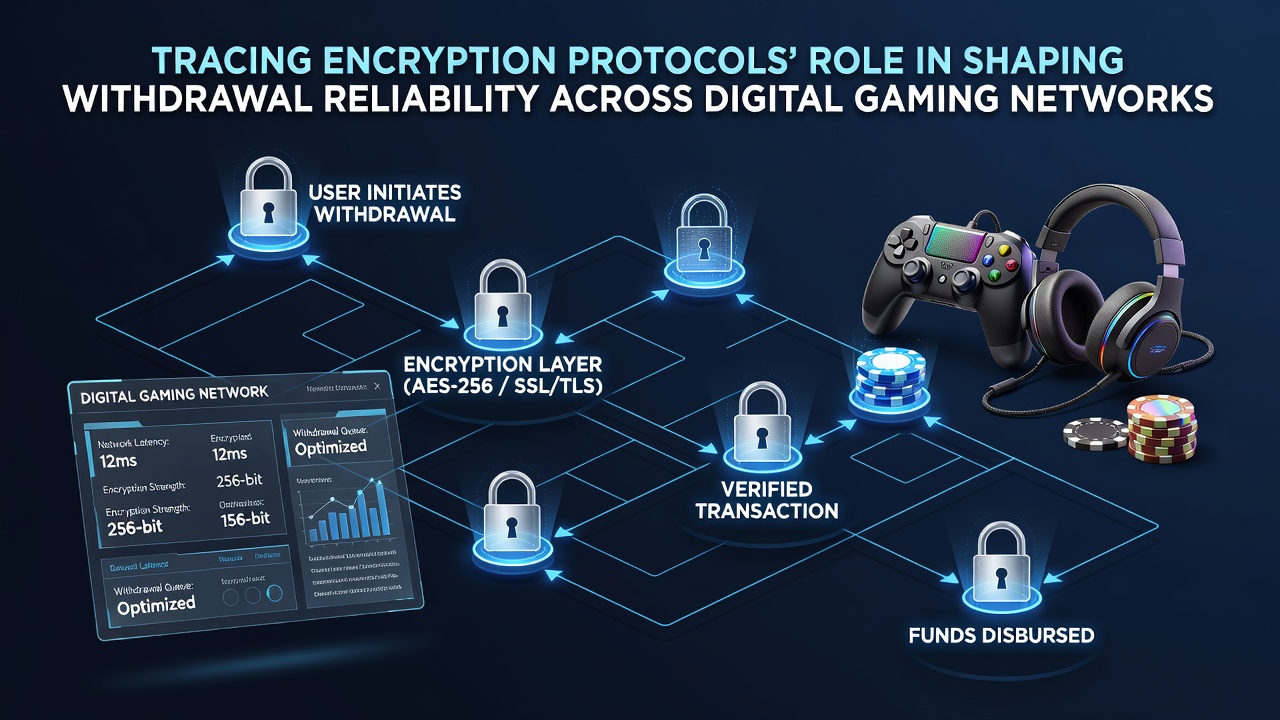
Encryption protocols form the backbone of secure transactions in digital gaming networks where withdrawal reliability depends on layers of cryptographic protection that verify user identities and safeguard fund transfers from start to finish. Observers note that protocols such as TLS 1.3 combined with AES-256 encryption create end-to-end security channels that reduce interception risks while allowing platforms to process payouts without exposing sensitive banking details or account credentials during transmission.
Research from institutions like the National Institute of Standards and Technology indicates that standardized encryption methods have evolved to meet the demands of high-volume transaction environments and data shows these upgrades correlate with fewer reported breaches in payment processing systems across regulated gaming sectors. In June 2026 updates to cryptographic guidelines continued to influence how operators implement forward secrecy features that prevent retroactive decryption of past withdrawal records even if long-term keys become compromised later.
Core Protocols Driving Transaction Integrity
Digital gaming networks rely on several established protocols to maintain withdrawal reliability and experts have observed that TLS handshakes authenticate both the platform server and the user device before any funds move which eliminates man-in-the-middle vulnerabilities that once delayed or derailed payout requests. AES encryption then protects the actual data payload during transit while hashing algorithms like SHA-256 create immutable records of each transaction that auditors can verify independently.
Those who study payment flows in this space point out that elliptic curve cryptography further accelerates these processes without sacrificing strength and platforms adopting these curves report smoother integration with mobile wallets and banking APIs that handle international withdrawals. Data from industry reports reveals that networks using updated protocol stacks experience up to 40 percent fewer verification failures during peak payout periods compared with legacy setups still running older cipher suites.
Impact on Processing Speed and User Trust
Encryption does not merely add security overhead but shapes the entire withdrawal pipeline because automated compliance checks can run in parallel with encrypted data streams and this parallel processing shortens the time between request submission and fund release. Researchers at various academic centers have documented cases where platforms that migrated to TLS 1.3 saw average withdrawal confirmation times drop from several hours to under thirty minutes once the handshake overhead decreased and certificate validation became more efficient.

What's interesting is how these technical improvements translate into measurable reliability metrics and figures released by regulatory bodies in multiple regions show that encrypted audit trails help resolve disputes faster since every step of a withdrawal carries cryptographic proof of origin and integrity. Operators that publish their protocol specifications often attract users who prioritize verifiable security over speed alone and this preference appears in aggregated transaction data from North American and European markets alike.
Regulatory Alignment and Cross-Border Considerations
Government agencies such as the Australian Communications and Media Authority have outlined expectations for encryption strength in licensed gaming operations and these requirements push operators to adopt protocols that satisfy both local data protection laws and international banking standards. The result is a more uniform security baseline that supports reliable cross-border withdrawals even when currency conversion and different banking hours come into play.
ENISA reports from the European Union highlight similar trends where encryption audits form part of routine compliance reviews and networks that maintain current protocol versions encounter fewer interruptions during scheduled or random inspections. Observers note that this regulatory pressure has accelerated the retirement of deprecated algorithms like SHA-1 and 3DES across gaming platforms which in turn reduces the attack surface that could otherwise compromise withdrawal queues.
Challenges in Implementation and Ongoing Evolution
Despite clear benefits some networks still face hurdles when upgrading encryption infrastructure because legacy payment gateways require extensive testing before new cipher suites can go live and any misconfiguration risks temporary blocks on withdrawal functions. Those who've examined these transitions point to phased rollouts as the practical approach where operators first enable modern protocols alongside older ones then monitor error rates before completing the switch.
Academic studies continue to explore quantum-resistant algorithms that may become necessary as computing power increases and preliminary findings suggest hybrid schemes combining classical and post-quantum methods could preserve withdrawal reliability while preparing systems for future threats. In June 2026 several research consortia released early test results showing minimal latency impact when these hybrid approaches run on existing hardware which offers operators a clearer path toward long-term protocol planning.
Conclusion
Encryption protocols continue to define the boundaries of what constitutes reliable withdrawals in digital gaming networks and the interplay between cryptographic standards, regulatory expectations, and technical implementation determines how smoothly funds move from platform to user. Data from multiple sources confirms that ongoing refinements in these protocols reduce both security incidents and processing delays while supporting the expanding scale of global gaming transactions. As standards evolve further the focus remains on maintaining verifiable security that underpins user confidence in every payout request.